

USA eSIM plans for travelers: prices, validity and hotspot support
Find the best esim for usa by comparing plan prices, validity, data, phone number options, and hotspot support—and learn when to install it before your trip.
The best eSIM for the USA is the one that fits your trip length, data needs, and hotspot use. Install it before you travel while you have a reliable internet connection, then follow the plan’s instructions for when to start using it. This keeps setup from competing with finding your way after landing.
Price and data allowance are useful starting points, but other details affect how well a plan fits your trip. To choose the best eSIM for the USA, consider how long the plan is valid, whether it includes a phone number, and whether hotspot use is allowed for connecting a laptop or another device.
This guide covers how to compare USA eSIM plans, what hotspot support means in practice, and when to install your eSIM. Use these details to find the best eSIM for the USA for your itinerary and get connected with less fuss.
Key Takeaways
- Learn how to tell whether a data-only eSIM fits your communication needs or a local phone number matters more.
- See when a regional plan can simplify connectivity across a trip that includes the United States and other destinations.
- Compare plan price and validity together so the data allowance suits the length and pace of your stay.
- Understand what to consider before relying on hotspot sharing, and when to install your eSIM for a smoother arrival.
Table of Contents
Local phone number availability
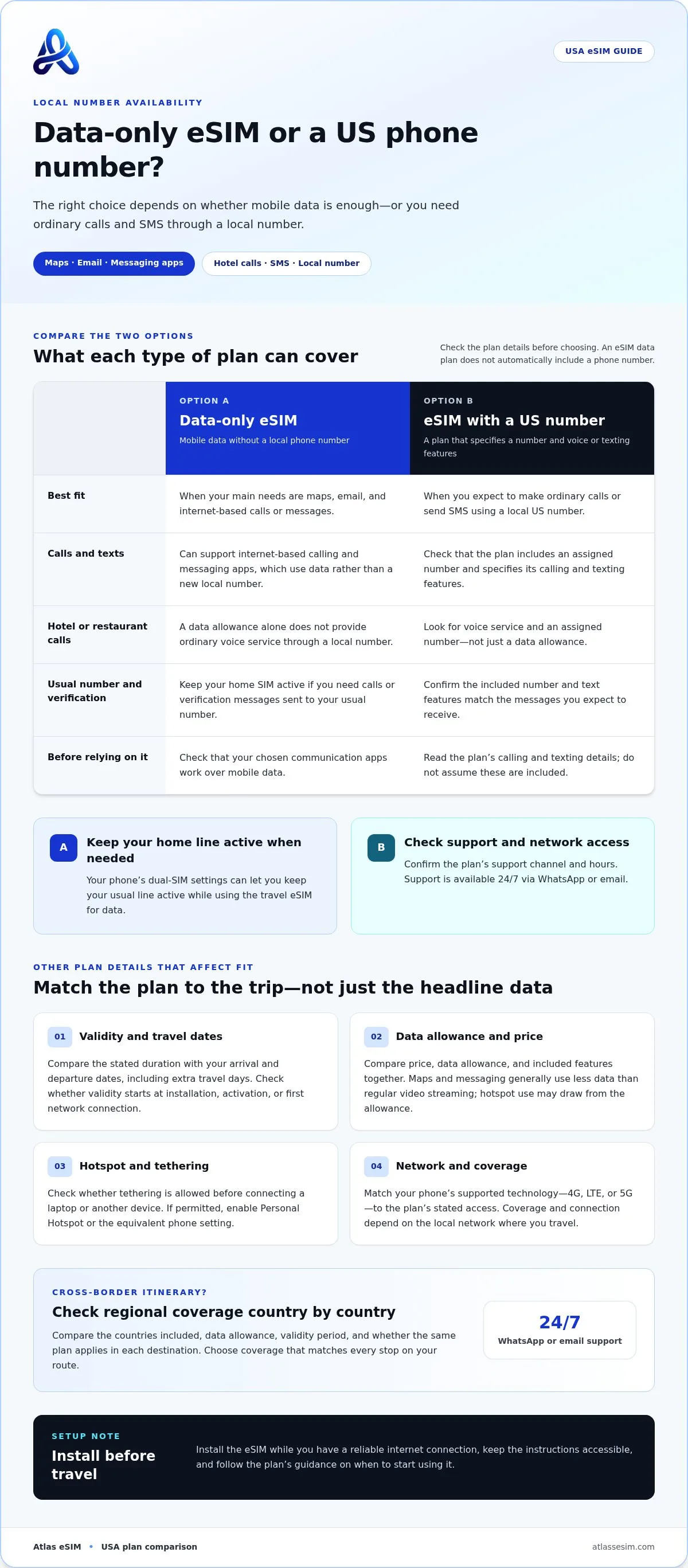
A US eSIM can provide mobile data without a local phone number. That matters if you need ordinary calls or SMS, such as messaging a hotel. Check the plan details for a number and any included calling or texting features. A data-only plan can still support internet-based calling and messaging apps, but these use data rather than a new local number. Keep your home SIM active if you need calls or verification messages sent to your usual number.
Match the plan details to what you need. If you mainly use maps, email, and internet-based calls, data may be enough. If you need a US number, choose a plan that includes one and specifies its calling and texting features. Don’t assume an eSIM data plan automatically includes a number. Your phone’s dual-SIM settings can let you keep your usual line active while using the travel eSIM for data.
- For hotel or restaurant calls: Look for voice service and an assigned number, not just a data allowance.
- For app-based communication: Check that your chosen apps work over mobile data.
- For support: Check the available channel and hours. Support is available 24/7 via WhatsApp or email.
- For 4G, LTE, or 5G: Match your phone’s supported network technology with the plan’s stated access. Coverage and connection depend on the network available where you travel.
- For hotspot use: Check whether tethering is allowed, then enable Personal Hotspot or the equivalent setting on your phone.
These details affect how useful the plan will be once you arrive. A traveler who only needs navigation may prioritize data, while someone expecting SMS-based confirmations may need a local number. Network access and hotspot support matter too, especially when using a laptop. Compare the plan features against your actual tasks before installing the eSIM, and keep the installation instructions accessible on another device or in saved notes.
Why use an eSIM in the United States?
An eSIM provides mobile data without handling a physical SIM card. The right plan depends on your trip length, destinations, device compatibility, and network access.
Regional Plan Coverage
A regional plan can cover the United States alongside other destinations, making it a possible fit for a cross-border itinerary. Check the countries included, data allowance, validity period, and whether the same plan applies in each destination. These details help you decide whether a regional option suits your route or a US-only plan better matches your stay.
For a short US visit, choose a plan whose validity matches your travel dates. For a long stay, compare the included data and renewal or top-up options; for cross-border travel, look for coverage across every country on your itinerary.
Network Coverage and Speeds
Connection quality depends on the local network available where you travel, your device, and whether the plan supports 4G, LTE, or 5G access. A plan’s network partner matters because service is delivered through its local coverage. Compare the listed partner with your destinations, especially if your itinerary includes smaller towns or rural routes.
T-Mobile is one network name travelers may encounter. If a plan lists T-Mobile as its US network partner, check the plan’s coverage details and your phone’s supported bands. A 5G label alone doesn’t guarantee the same connection in every location.
Which US eSIM suits short trips, long stays, or cross-border travel? For a short trip, match validity to your dates; for a longer stay, consider your data needs and top-up options. Choose a regional plan when your itinerary includes the United States and other covered countries.
How do you buy, install, and activate one? Choose a plan and complete your purchase, then follow the installation instructions using a stable internet connection. Add the eSIM in your phone’s settings, select it for mobile data, and follow the plan’s instructions to start using it.
What limitations, roaming rules, or fees should you consider? Review the plan’s included countries, data limits, hotspot terms, and whether calls or texts are included. Check when validity begins and whether roaming, extra data, or use beyond the allowance affects the price.
For an itinerary across borders, compare regional eSIM plans against the countries you’ll visit and the data you expect to use.
United States eSIM package prices and validity periods
Compare the listed price with the data allowance and validity period. The lowest upfront cost may not suit a trip that requires more data or a longer period of access.
Plan Prices and Data Allowances
For each USA eSIM plan, compare price, data allowance, and included features together. Capped-data plans provide a set allowance, while Unlimited Data plans are subject to fair-use rules. Match the plan to tasks such as maps, messaging, video calls, or laptop hotspot use.
For example, maps and messaging generally use less data than regular video streaming. Compare your expected use with the plan allowance, then consider the price and the amount of data included. Also check whether hotspot use draws from that allowance. Comparing these details makes plans easier to assess than looking at the headline price alone.
Package Validity Periods
Validity describes how long a plan remains usable. Compare its stated duration with your arrival and departure dates, including any extra travel days. A plan that expires before your return may leave you without its included data for the final part of your trip.
Check when validity begins. It may start on installation, activation, or first network connection, depending on the plan terms. Installing before departure can have a different effect from starting to use the plan after landing. Follow the instructions so the usable period fits your US itinerary.
Keep a simple comparison for each option: price, data allowance, validity, and hotspot terms. Estimate your daily needs based on planned activities. Navigation, email, and messaging use data differently from video calls or streaming, so consider your routine rather than focusing only on the largest advertised allowance. If you plan to connect a laptop, factor in hotspot use before choosing.
Compare plan limits, not just the total data. Check whether the allowance is capped or unlimited, when validity begins, and what happens when included data runs out. These terms shape the plan’s practical value. A side-by-side comparison helps you choose an option that fits both your travel dates and how you’ll use your phone.
Hotspot and tethering support
A hotspot lets your phone share mobile data with another device. You might use one to connect a laptop for email or a travel companion’s tablet. Before relying on it, check that hotspot use is allowed on the plan and that your phone supports the feature. A large data allowance alone doesn’t guarantee hotspot access.
Consider what you’ll connect and how you’ll use it. A laptop downloading files can use data faster than a phone checking maps. Video calls and streaming can also draw heavily on your allowance. If you plan to work from a hotel room, account for those activities alongside regular phone use. Then check the plan’s data terms and any hotspot-specific limits.
- Check plan terms: Look for hotspot or tethering support and any stated restrictions.
- Review your device: Find Personal Hotspot on iPhone or Hotspot and tethering in Android settings.
- Set a password: Use your phone’s hotspot settings before connecting a laptop or tablet.
- Watch data use: Pause automatic updates and cloud backups on connected devices.
At your destination, select the eSIM for mobile data and enable your phone’s hotspot. Connect one device, such as your laptop, and open a simple webpage to test the connection. If it doesn’t work, check that mobile data is active, hotspot use is permitted, and the device joined the correct network. This can help you identify whether the issue is with settings or plan terms.
Hotspot use can make one phone a practical connection point for several travel tasks, but it also concentrates data use on the eSIM. If your itinerary includes laptop work, prioritize a plan that supports tethering and provides an allowance suited to that use. Explore eSIM plans with hotspot support and compare their stated data terms before choosing.
Atlas eSIM: Local eSIM data plans
Atlas eSIM offers local prepaid data plans for travel in the United States, with no need to swap a physical SIM card. If your itinerary crosses borders, Atlas eSIM Regional Plans may be a better fit than buying a separate plan for each destination.
Plan details show the price and data allowance upfront, helping you compare options against your trip length and expected use. Hotspot and tethering are available on compatible plans, so review plan details if you’ll connect a laptop or tablet. After purchase, customers usually receive an installable QR code in under 60 seconds.
Choose a local plan for a US-focused visit or a regional option for a multi-country route. Visit atlassesim.com to explore Atlas eSIM plans, with prices and data allowances shown before checkout.
Get your connection ready for the trip
Turn your itinerary into a simple connectivity plan: consider where you’ll travel, what you’ll use data for, and whether another device needs a connection. These priorities make it easier to compare options without getting distracted by features you won’t use. The best eSIM for the USA is the one that fits your actual travel needs.
Atlas eSIM offers local prepaid data plans for US-focused travel and Regional Plans for trips across multiple destinations. Use your route and device needs to decide which type suits you, then review the plan details before you travel. You can install the eSIM ahead of time and follow the setup instructions without rushing after arrival.
For help choosing a suitable option for your trip, contact Atlas eSIM. A little preparation now can make staying connected feel like one less thing to manage on the road.
Frequently Asked Questions
When should I install my eSIM?
Install your eSIM before departure while you have reliable Wi-Fi, then follow the instructions to start using it at your destination. This separates setup from airport tasks like finding transport or opening a map. With Atlas eSIM, you can install before leaving and use data when you begin using the plan at your destination. Keep the installation details accessible offline in case you need them during your journey.
Which eSIM providers offer the best coverage across the United States?
No single provider is best for every itinerary. Compare each plan’s network partner against the places you’ll visit, including smaller towns or rural stops between cities. A nationwide label alone won’t tell you how service performs along your specific route. If a plan names T-Mobile as its US network partner, use that detail alongside the plan’s coverage information and your planned destinations.
What are the current prices and data allowances for US eSIM plans?
Prices and data allowances vary by plan, so compare them with how you’ll use your phone. Navigation, messaging, and occasional email call for different data needs than regular video calls or laptop tethering. Consider validity too: a plan may not suit your trip if its data or usable period falls short. Atlas eSIM shows prices and data allowances before checkout.
Which US eSIM plans include unlimited data, and what are their speed limits?
Atlas eSIM offers Unlimited Data plans, but “unlimited” doesn’t mean unrestricted use or speed. Review the fair-use rules upfront, especially if you rely on video calls, streaming, or hotspot use. These terms explain how the plan handles heavier data use. Match them to your needs rather than relying on the Unlimited label alone.
Do US travel eSIMs include a phone number, calls, or SMS?
Travel eSIMs can provide data without a local phone number, calls, or SMS. Atlas eSIM plans are prepaid for data, and you can keep your home SIM active for calls and text messages. Use the travel eSIM for maps and internet access while your usual line receives messages. Internet-based calling and messaging apps can also work over mobile data.
Which US mobile networks do travel eSIM providers use?
Travel eSIMs connect through local network partners, and the partner can vary by plan. Some US plans identify T-Mobile as their network partner. Check the listed network against your itinerary, then consider whether your phone supports the plan’s stated network technology. A plan’s partner name can help you compare options, but your route and the plan’s coverage details remain important.