A practical breakdown of data usage by activity, so you stop overpaying for a plan you won't finish — or running out on day three.
One of the most common questions travelers ask before buying an eSIM is simple: how much data do I actually need? Buy too little and you're stuck hunting for Wi-Fi on day three. Buy too much and you've paid for data you'll never touch. Here's a practical way to figure it out before you check out.
Data usage depends far more on your habits than your destination. A rough breakdown of common activities:
Maps and navigation — light. About 5–10 MB per hour of active use.
Messaging apps (WhatsApp, iMessage, text-based chats) — very light. Under 1 MB per hour unless you're sending lots of photos or video.
Social media browsing (Instagram, TikTok, X) — moderate to heavy. Expect 150–300 MB per hour of scrolling, more if autoplay video is on.
Music streaming — moderate. Around 40–60 MB per hour on standard quality.
Video streaming (Netflix, YouTube) — heavy. 300 MB to 1 GB+ per hour depending on resolution.
Video calls — heavy. 200–400 MB per hour on standard definition.
Light user (maps + messaging, mostly relying on hotel/café Wi-Fi): 250–500 MB/day
Average user (maps, messaging, some social browsing, music): 1–2 GB/day
Heavy user (social media, streaming, video calls, minimal Wi-Fi reliance): 3 GB/day or more
Multiply your daily estimate by the length of your trip, then add a small buffer — 10–15% is usually enough — for the days you use more than planned.
Download offline maps for your destination before you leave — most navigation apps support this, and it removes maps from your data usage almost entirely.
Download music and podcasts in advance over Wi-Fi rather than streaming on the go.
Set social apps to lower video quality or disable autoplay while on mobile data.
Use hotel, café, and airport Wi-Fi for anything heavy — video calls, uploading photos, streaming — and save your eSIM data for when you're out and about.
Running out of data mid-trip is a worse experience than having a little left over — and most plans let you top up instantly if you do run low, so there's no need to overbuy "just in case." Start with your realistic daily estimate, add a small buffer, and adjust for your next trip based on what you actually used.
Once you're on your trip, don't just guess how much data you have left — check it directly in the app:
Open My eSIMs in the Atlass app
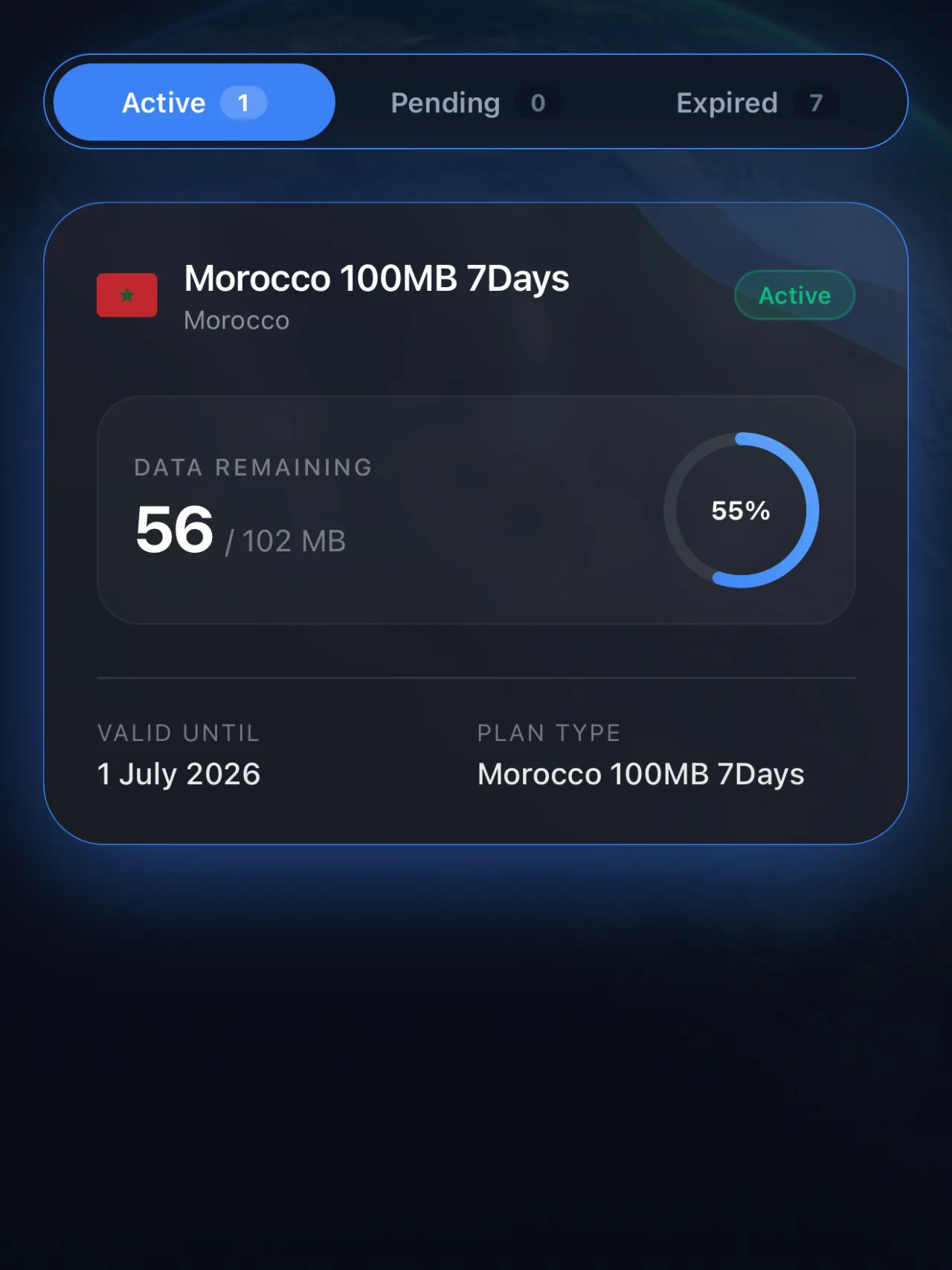
Tap your active eSIM plan
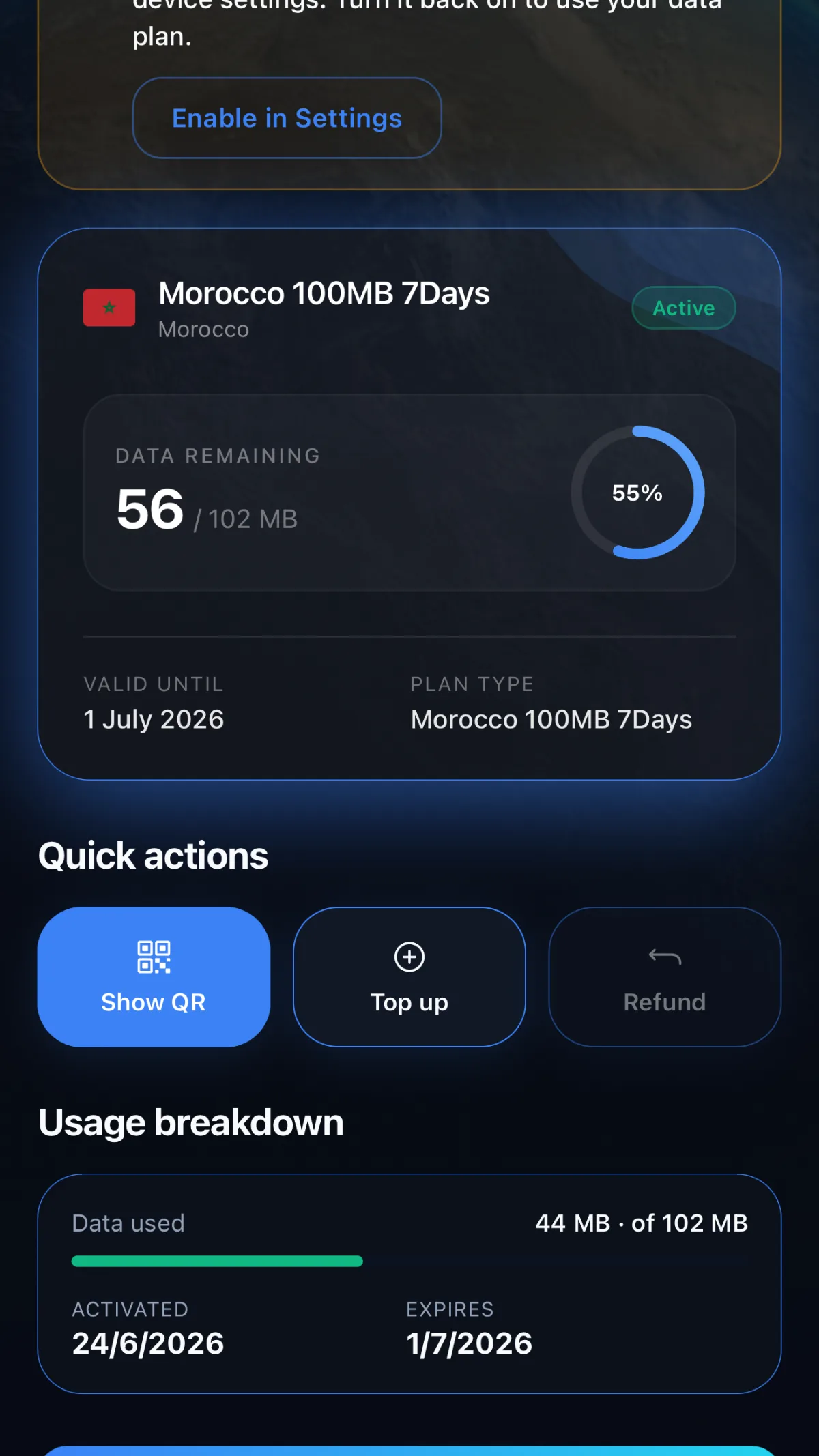
Check the circular progress bar showing your remaining data at a glance
If you're running low with days left on your trip, tap Top Up right there on the same screen — no need to buy a whole new plan or start over.
Whatever your data habits, get a plan sized right the first time — no guesswork, no overpaying.
Browse data plans by destination →
Browse plansPrefer to set it up in-app?