
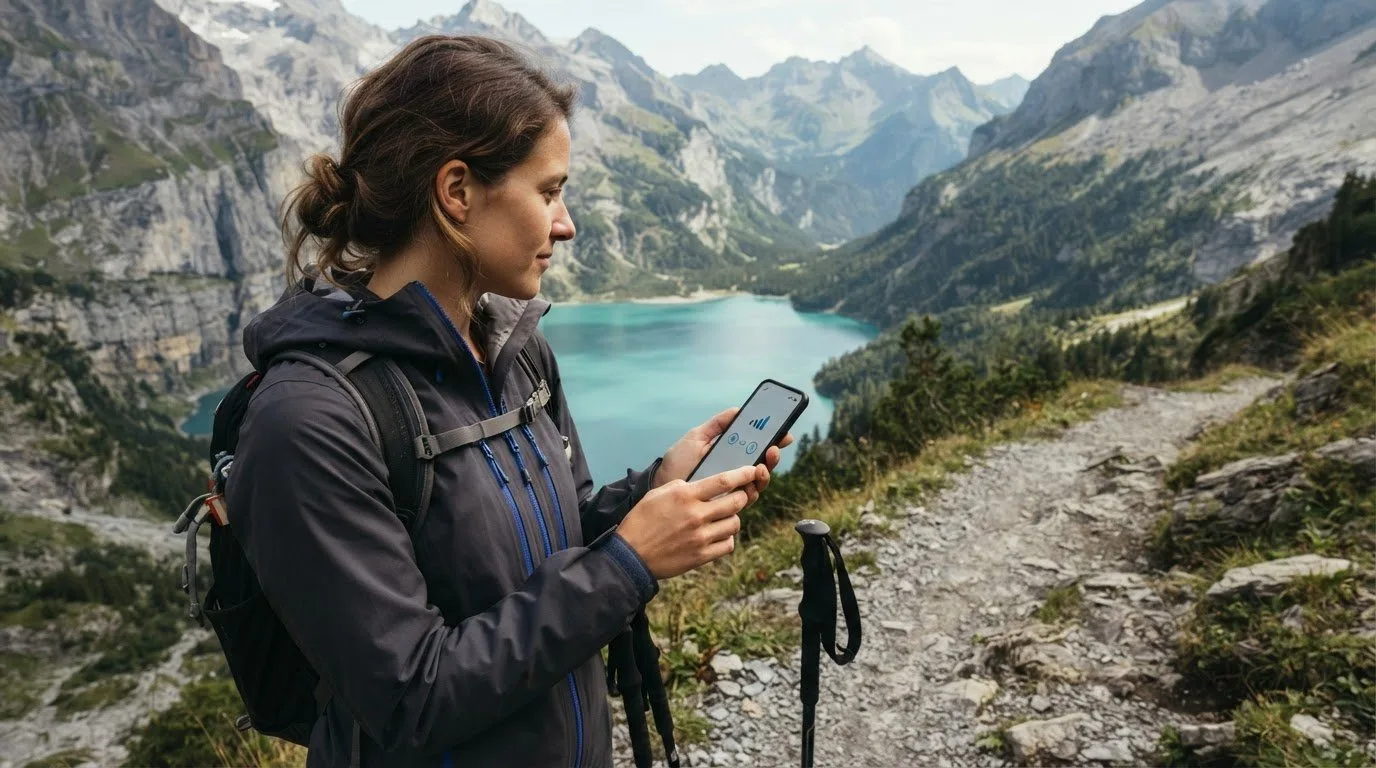
ESIM for Switzerland: Get Connected Before You Travel
Set up an esim switzerland plan before departure, check device compatibility and route coverage, and learn how to activate data for a connected arrival.
Set up an esim switzerland plan before you travel so you can get online when you arrive. Choose a prepaid data plan, check that your phone supports eSIM, then install it by following the setup instructions. An eSIM installs as a secondary digital line, so you can keep your home SIM active for calls and SMS.
Before you go, check your phone’s compatibility and the plan’s coverage for your itinerary, especially if you’ll travel beyond major cities. Review when the plan starts, its data allowance, and whether it suits how you’ll use your phone for maps, messages, and browsing.
This guide explains how to choose a Switzerland plan, check your device and coverage, and set up your eSIM before departure. You’ll also learn what to expect when you activate it and how to make a practical choice for your trip, without adding extra steps at the airport.
Key Takeaways
- Match a Switzerland data plan to your trip length and expected usage, then compare its allowance and terms before choosing.
- Check that your phone supports eSIM before you buy, and make sure it’s unlocked for use with another network.
- Plan for coverage along your route, including in alpine areas, where connectivity can differ from larger cities.
- Install your eSIM before departure and follow the activation steps when you’re ready to use mobile data; local and regional plans offer options for different itineraries.
Table of Contents
How to get an eSIM for Switzerland?
Choose a plan by trip length, data needs, and how you use your smartphone. Install it before you arrive, then select it for mobile data in your settings.
Plan Prices and Data Allowances
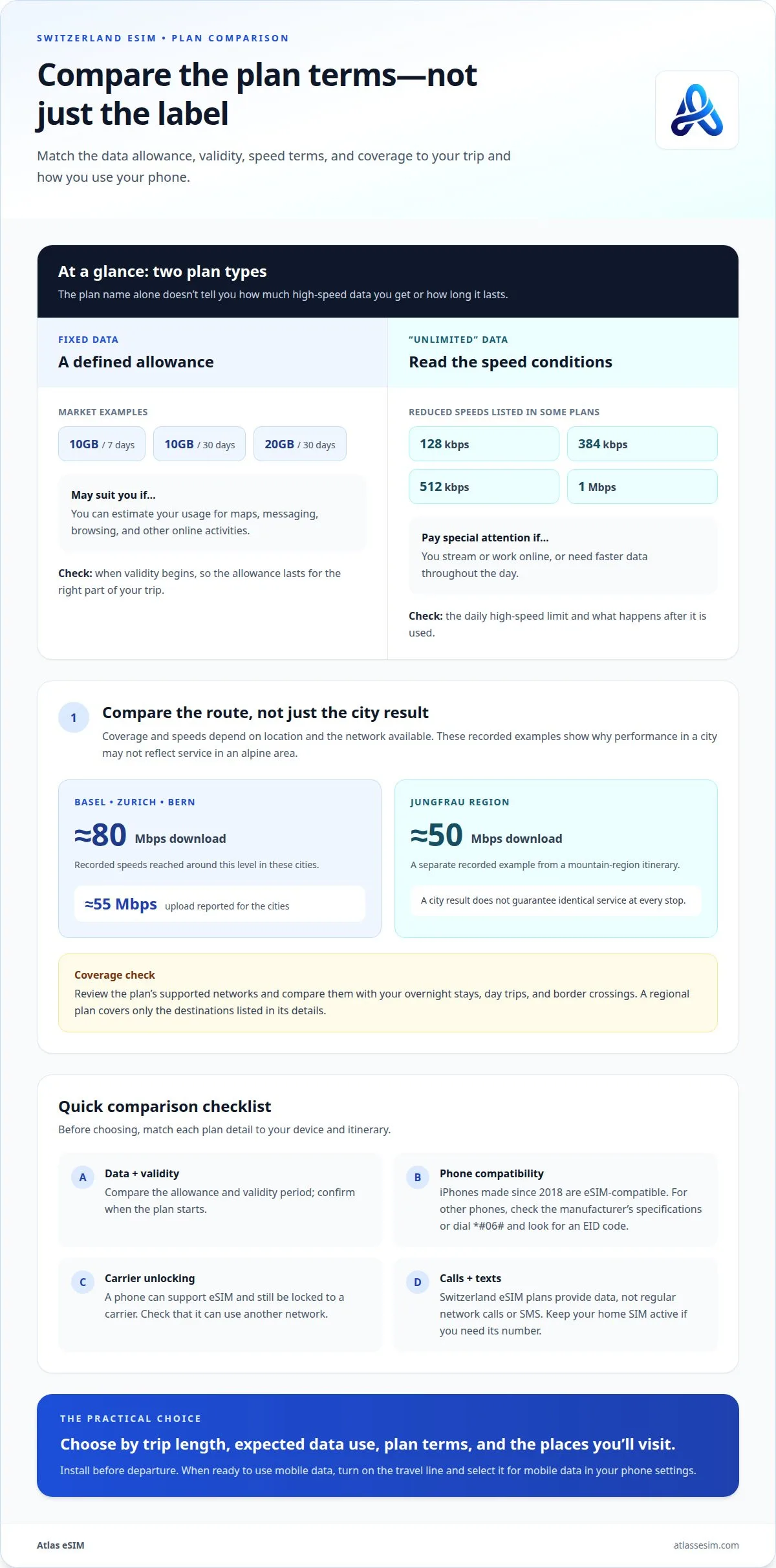
Compare the included data allowance and validity period, not just the plan label. Market examples include 10GB for 7 days, 10GB for 30 days, and 20GB for 30 days. A fixed-data plan suits travelers who can estimate their usage. Check when validity begins, since that affects how long the allowance lasts during your trip.
“Unlimited” can still come with a high-speed allowance. Some plans reduce speed after the included allowance, with listed reduced speeds such as 128kbps, 384kbps, 512kbps, or 1Mbps. Check the daily high-speed limit and reduced-speed terms before you select a plan, especially if you stream or work online.
Selecting an eSIM for Data
After installing the eSIM, open your phone’s cellular or mobile settings and turn on the travel line. Select it as the line for mobile data. Keep your home SIM active for your usual number if needed, and confirm that mobile data uses the travel eSIM when you arrive.
Switzerland eSIM plans provide data, not regular network calls or SMS. Use messaging apps over data, or keep your home SIM active for calls and texts. Check your line settings so your home SIM isn’t selected for mobile data by mistake.
If the eSIM has no service or won’t connect to data, confirm it’s installed, switched on, and selected as the data line. Check the plan’s activation instructions, then restart your smartphone and try again. If service still doesn’t appear, check the plan’s validity and data allowance.
Device compatibility
No Switzerland eSIM is best for coverage and speed everywhere. Choose based on your route and the network used; recorded speeds reached around 80 Mbps download in Basel, Zurich, and Bern, and around 50 Mbps in the Jungfrau Region.
Start with your device. iPhones made since 2018 are eSIM-compatible. For other smartphones, check the manufacturer’s specifications or dial *#06# and look for an EID code. That step helps identify eSIM capability before purchase, rather than discovering a limitation after arrival.
A phone that supports eSIM may still be locked to a mobile carrier. Check whether your device can use another network before buying a travel plan. A locked phone can prevent you from using a travel eSIM, even if its hardware supports eSIM.
Compare plans by covered destinations, validity, data allowance, and network access. For a trip focused on Switzerland, a local plan may fit; for travel across borders, a regional plan can cover multiple listed destinations. Match the plan details to your route rather than relying on the headline data allowance.
Coverage and speed depend on where you travel and the network available there. Measurements in Basel, Zurich, and Bern reached approximately 55 Mbps upload, while the Jungfrau Region recorded around 50 Mbps download. These examples show why a city result may not reflect service in a mountain area. Choose with your stops in mind.
Before purchase, confirm compatibility and carrier unlocking, then keep your existing SIM available if you need its number. If you rely on WhatsApp for messaging, remember that the app needs an internet connection. Compare Switzerland data plans with your device and itinerary in mind.
No single esim switzerland plan guarantees the same coverage and speeds everywhere. Check the plan details and choose one that fits your route, as network performance can vary between cities and mountain areas.
Swiss mobile network coverage
Coverage depends on the networks listed in the plan and where you travel. Review the plan’s network details against your route, especially for journeys beyond city centers.
Network Partnerships and Supported Networks
An eSIM connects through the network or networks listed in its plan details. Before choosing, review the supported network information alongside your itinerary. A route through Zurich, a lakeside stop, and an alpine village may encounter different coverage conditions. A strong signal in one place doesn’t guarantee service throughout the route.
Check whether the plan lists one network or multiple networks, then consider where you’ll need mobile data most. If reliable access matters for navigation or messaging, review the network information for each destination rather than relying on one city example. An Unlimited Data allowance affects how much data you can use, not where a network has coverage. Plan terms can vary, so review the details before choosing.
5G and Regional Coverage
5G access depends on the phone, local network, and plan support. Don’t assume a 5G label means 5G will be available at every stop. For a practical check, confirm that your device supports the network technology and that the plan includes access where you’ll travel.
A regional eSIM can suit an itinerary that crosses borders. Read the covered-destination list before purchase and confirm that each planned stop is included. A regional plan can simplify data access across its listed destinations, while a local plan focuses on one destination. Check the coverage list, not just the plan’s regional label.
To assess coverage for your trip, mark your overnight stays, day trips, and border crossings. Then compare those locations with the plan’s network information. Basel, Zurich, Bern, and the Jungfrau Region are distinct stops to consider, not a guarantee of identical service throughout each area.
Finally, match the data allowance to your expected use. Maps and messaging require connectivity, so an unlimited data allowance does not guarantee a reliable connection where the signal is weak or unavailable. Save key directions before travel and use offline options for remote stretches.
ESIM installation and activation
Install your eSIM with a reliable internet connection before travel. Follow the plan’s setup instructions, then activate it when you’re ready to use mobile data.
QR Code and Manual Installation
For QR setup, open your phone’s cellular settings, choose the option to add an eSIM, and scan the code displayed on another screen. Keep the QR code accessible until installation is complete. If you can’t scan it, use the manual setup details provided with the plan. Avoid deleting an installed eSIM while troubleshooting.
An internet connection is needed to download the eSIM profile. Use Wi-Fi during installation, and keep the phone connected until the download completes. If your instructions provide a QR code, customers usually receive an installable code in under 60 seconds.
Installation Timing
Install the eSIM before departure, while you have a dependable internet connection and time to follow each prompt. Check the plan’s instructions first, as installation and starting service may be separate steps. Atlas eSIM can be installed before your trip, and you can start using its data when you arrive.
After landing, open cellular settings and select the travel eSIM for mobile data. Turn on data roaming for that line only if the plan’s instructions require it. Keep your home SIM active for calls or messages, and confirm the eSIM is selected before browsing.
If your data allowance runs low, review the plan instructions for top-up options. Don’t assume a top-up extends validity; check how additional data affects the plan period. If the eSIM won’t connect, confirm installation is complete, the line is enabled, and it’s selected for data. Restart your phone and reconnect to mobile service.
Atlas eSIM
Atlas eSIM offers prepaid Local eSIM data plans and Regional Plans for travelers heading to Switzerland. Choose based on your itinerary: a local plan suits a trip focused on Switzerland, while a regional plan can suit travel across multiple covered destinations. Prices and data allowances are shown before checkout, so you can compare plans and prepare your data access before departure.
Consider where you’ll travel, how long you’ll stay, and how you use data for maps, messaging, and browsing. Then choose a plan that fits and review its allowance and validity details before installation. If Switzerland is one stop on a wider itinerary, a regional plan may make it simpler to use data across its listed destinations.
For help choosing a suitable plan for your route, contact Atlas eSIM.
Make connectivity part of your travel plan
Before you leave, decide how you’ll use mobile data on your first day. Save your accommodation details and essential directions for offline access, then keep the eSIM setup instructions handy. This way, you can prepare before arrival rather than figuring out how to get online at the airport.
When choosing an esim switzerland plan, consider whether your itinerary stays in one country or crosses borders. Atlas eSIM offers Local eSIM data plans and Regional Plans, so you can select an option that matches your route. Review the plan details and purchase before departure, while you have time to prepare.
If you’d like help choosing a plan for your trip, contact Atlas eSIM. A little preparation now can make staying connected one less thing to think about as you travel.
Frequently Asked Questions
Can I make calls and send SMS?
A Switzerland travel eSIM is generally for mobile data, not regular network calls or SMS. Keep your home SIM active if you need its number for calls and texts, and check your phone’s line settings to avoid selecting it for travel data. Internet-based calling and messaging apps can use the eSIM’s data connection, subject to the plan’s allowance.
How do I know how much data I’ve used?
Check mobile data usage in your phone’s settings and select the travel eSIM line if your device separates usage by SIM. For a trip-specific reading, reset the usage counter when you start using the plan. Phone counters may differ from the plan’s account records, so use the plan management tools to view its allowance.
How does an eSIM work?
An eSIM is a digital profile installed on a compatible phone, not a removable card. You buy a prepaid data plan, install its profile using the provided setup method, then select the eSIM for mobile data. For example, you can keep your home SIM active for your usual number while the travel eSIM handles maps and browsing.
Which eSIM providers offer service in Switzerland?
Atlas eSIM offers prepaid travel data plans for Switzerland, including Local eSIM data plans and Regional Plans. Choose according to your itinerary: a local plan suits a trip focused on Switzerland, while a regional plan can cover the destinations listed for that plan. Review the covered destinations and plan details before purchasing to make sure the option fits your route.
How much do Switzerland eSIM plans cost, and how much data do they include?
Atlas eSIM shows each plan’s price and data allowance before checkout. Plans are prepaid, so review the allowance and validity details before choosing. Options include capped data packs and Unlimited Data plans, which have fair-use rules shown upfront. For an esim switzerland plan, match the allowance to your expected use, such as maps, messaging, and browsing.
Does a travel eSIM include calls and texts or data only?
Atlas eSIM travel plans provide prepaid data, not regular mobile calls or SMS. You can keep your home SIM active for calls and texts while using the eSIM for mobile data. An esim switzerland plan suits travelers who want internet access abroad while keeping their usual number available to friends and family.