

ESIM Canada Travel Data Plans for Your Trip
Plan your eSIM Canada trip with tips on compatibility, coverage, data allowances and installation to choose a plan and connect with confidence before you go.
An eSIM for Canada adds a mobile data plan digitally to a compatible phone, without replacing your physical SIM. Install it before travelling or while connected to Wi-Fi, then use mobile data for maps, messaging and other online essentials. First, check that your device supports eSIM.
Reliable data should be easy to arrange, not another complication on your trip. An eSIM can simplify getting connected, but coverage and speeds depend on your location and the network available there. This guide covers phone compatibility, what to consider about service in Canada, and how to choose and install a plan. You’ll also find practical steps to take before departure, so you can arrive prepared to connect.
Key Takeaways
- Check your phone’s eSIM compatibility before choosing a travel plan, then compare data allowances with how you expect to use your phone.
- Match plan validity and data type to your itinerary, whether you need connectivity for a short visit or a longer stay.
- Coverage and speeds can vary by location and network, so consider where you’ll travel and what you’ll use data for.
- Prepare installation before departure, or use Wi-Fi to set up your eSIM, then select it for mobile data when you’re ready to connect.
Table of Contents
Is my phone eSIM-compatible?
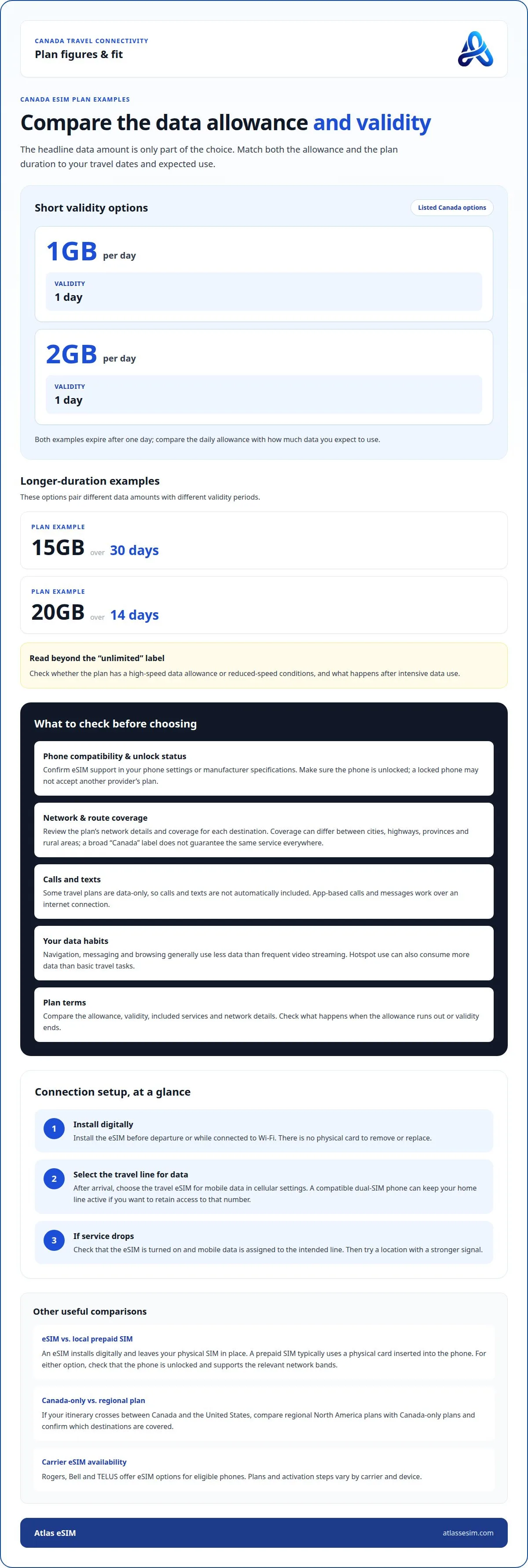
Start with your phone’s settings or manufacturer specifications and look for eSIM support. Then confirm the device is unlocked, so it can use a mobile plan from another provider. An eSIM-compatible but locked phone may not accept a travel plan. Before checkout, compare the plan’s data allowance and validity: listed Canada options include 1GB per day or 2GB per day, each with one-day validity.
In Canada, Rogers, Bell and TELUS offer eSIM options for eligible phones. Plans and activation steps vary by carrier and device. Do Canadian eSIM plans include calls, texts and data? Some travel plans are data-only, so calls and texts aren’t included automatically. Check the plan details before purchase. App-based calls and messages work over an internet connection.
Compare an eSIM with a local prepaid SIM by considering setup and plan inclusions. An eSIM installs digitally, so you don’t need to remove your physical SIM. A prepaid SIM typically uses a physical card that you insert into your phone. With either option, check that your phone is unlocked and supports the relevant network bands before travelling.
Network compatibility matters as much as eSIM support. Check your phone’s specifications, then review the plan’s network details and coverage. A phone can support eSIM but still be locked to its home carrier. Consider your data allowance, too: maps and messaging generally use less data than frequent video streaming.
Use a simple comparison at checkout: note the data allowance, validity period, whether calls or texts are included, and network details. For example, a one-day plan with 1GB per day differs from one offering 2GB per day, even when both expire after one day. These checks help you choose an eSIM plan that fits your unlocked phone and trip.
Why get an eSIM for Canada?
A travel eSIM can keep mobile data separate from your home plan while you visit Canada. Choose the payment style, allowance, and validity that match your itinerary.
Monthly and Prepaid Plan Options
A monthly plan charges by recurring billing periods, while prepaid data is paid for upfront with a stated allowance or duration. For a short visit, prepaid can make it easier to match a plan to your travel dates. For a longer stay, compare the billing period with your time in Canada and review the plan’s data terms.
Before checkout, check what happens when your allowance runs out or the plan’s validity ends. An eSIM downloads to a compatible device, so there’s no physical card to replace. You can install it before departure and follow the plan’s instructions to start using it when you’re ready to connect.
Data Allowances and Plan Durations
Compare the data amount with how you use your phone. A listed Canada plan offers 15GB over 30 days; another offers 20GB over 14 days. These examples suit different trip lengths and usage patterns, so look beyond the headline allowance and match both figures to your itinerary.
Unlimited plans are another option, but read the terms for any high-speed allowance or reduced-speed conditions. “Unlimited” alone doesn’t explain what speeds apply throughout the plan. Check its validity and what happens after intensive data use before choosing.
For recommendations, start with your travel dates and expected use. A 14-day visit may suit a plan with 14-day validity; a longer trip may align better with a 30-day option. If you’ll cross between Canada and the United States, compare regional North America plans with Canada-only plans and check which destinations their coverage includes.
Estimate your data needs by considering navigation, messaging and browsing. Video streaming and hotspot use can consume more data than basic travel tasks. Choose a prepaid allowance or unlimited option to suit your habits, then review the plan’s validity and speed terms before purchase.
Canadian eSIM coverage and network speeds
An eSIM connects through the mobile network included with its plan. Before installation, check that network’s coverage in each region on your itinerary.
Canadian Coverage and Mobile Networks
Coverage depends on the Canadian mobile network that supports the eSIM, not on eSIM technology itself. Review the plan’s network details and compare them with coverage information for your destinations. Service in central Toronto, for example, may differ from coverage along a remote highway.
Speeds depend on the available network, local signal and network congestion. Your device also affects the experience. Check a coverage map to plan where you’ll need internet, and download maps or other essentials before travelling through areas with limited service.
Coverage Across Provinces and Rural Areas
Coverage can vary between provinces, cities, highways and rural communities. A plan that works well in one region may not provide the same experience throughout your route. Check the plan’s network against each stop, especially if you’re travelling beyond major cities to remote parks or smaller towns.
Don’t assume coverage is the same across an entire province. Compare the network’s coverage map with your route and destinations instead of relying only on a broad “Canada” label. Check both your arrival city and any rural overnight stops before choosing a plan.
Using an eSIM Within Its Coverage Area
After arrival, select the travel eSIM for mobile data in your phone’s cellular settings. Keep your home line enabled if you want to retain access to that number, and select the travel line for data. A dual-SIM device can keep two lines available, though calls and texts depend on each line’s plan.
Can you use a Canadian eSIM and keep your home number active? Yes. A compatible dual-SIM phone can keep your home line active while the eSIM provides mobile data. After installation, select the travel line for data and confirm that your home line remains enabled.
If service drops, make sure the eSIM is turned on and mobile data is assigned to the intended line. Then move somewhere with a stronger signal and try again. These checks can help you tell whether the issue is with your settings or limited coverage in that location.
Buying and installing a travel eSIM
Choose a plan that matches your destination, data needs and travel dates. Before checkout, confirm your phone is compatible and unlocked. Compare the data allowance, validity and network, and check whether calls or texts are included. For a seven-day trip, for example, a plan with seven-day validity may fit better than a longer plan you won’t use in full.
After purchase, install the eSIM using the provider’s instructions. Many plans use a QR code, which you scan through your phone’s cellular settings. Atlas eSIM customers usually receive an installable QR code in under 60 seconds. Keep the QR code accessible on another screen or device while you install it.
- Connect your phone to Wi-Fi before starting installation.
- Open cellular or mobile settings and choose the option to add an eSIM.
- Scan the QR code or follow the plan’s manual installation steps.
- Label the new line, such as “Canada,” so it’s easy to select.
- Choose the eSIM for mobile data when you’re ready to use it.
Installing an eSIM profile and starting service can be separate steps. Follow the plan’s activation instructions, then select the travel line for data after arrival. Keep your home line active if you need its number. An eSIM installs as a secondary digital line; it doesn’t replace your physical SIM. “Unlimited data” also doesn’t necessarily mean unlimited high-speed use, so read the plan’s terms before relying on it.
What should you do if activation fails? Connect to Wi-Fi, check that the eSIM is installed and selected for mobile data, then restart your phone. If the issue continues, review the installation instructions and contact the plan’s support team.
Ready to set up a travel plan? Choose a Canada eSIM data plan and follow its installation steps before departure.
Atlas eSIM: Local eSIM data plans
Atlas eSIM offers Local eSIM data plans for travellers who want mobile data in Canada. The eSIM installs as a secondary digital line, so you can keep your home SIM active for calls and SMS. Choose a local plan for a Canada-focused trip, and compare its allowance and validity with your itinerary before travelling.
If your route crosses borders, Regional Plans can cover multiple destinations under one plan. The right choice depends on where you’re going and how you’ll use mobile data for maps, messages and browsing. Atlas eSIM shows the price and data allowance before checkout, making it easier to compare plans with your travel needs.
Once you’ve settled on a local or regional plan, follow its installation steps and select it for mobile data when you’re ready to connect. Visit atlassesim.com to explore the available travel eSIM plans.
Make connectivity part of your trip planning
Choosing an eSIM for Canada is easier when you consider it alongside your itinerary, not during a rushed arrival. Think about when you’ll rely on mobile data most: finding your accommodation, coordinating a pickup or checking plans after a change. This helps you focus on the plan details that matter for your trip.
Before departure, keep travel arrangements and essential information accessible without an internet connection. Then consider how you’ll use your phone, from quick navigation checks to staying in touch with people at home. A little preparation can mean less time adjusting settings and more time focused on your destination.
For a straightforward next step, contact Atlas eSIM for help choosing a travel data plan. Get your connectivity plan in place and head into your trip feeling prepared.
Frequently Asked Questions
How does eSIM work?
An eSIM profile is added digitally to a compatible phone, then selected in its cellular settings. The phone uses the plan’s supported mobile network for data. For example, label a travel profile “Canada” and select it for mobile data while keeping your home line available for calls and SMS. Wi-Fi can help you complete setup before departure, so you’re ready to use your phone after arrival.
What are the benefits of eSIM?
An eSIM adds a travel data line without requiring you to carry or swap another SIM card. It installs as a secondary digital line, so you can keep your home SIM active for calls and SMS. For example, use the travel line for maps and messaging while keeping your regular number available. This makes an eSIM for Canada a practical option for travellers who want both lines on one compatible phone.
When should I install my eSIM?
Install your eSIM before departure while you have reliable Wi-Fi and time to follow the setup steps. You can wait until you reach its destination to start using the plan, following its activation instructions. Separating installation from arrival means you won’t need airport Wi-Fi just to add the profile. Keep the installation details accessible until your eSIM for Canada is ready to use.
What is an eSIM and how does it work in Canada?
An eSIM is a digital SIM profile that connects a compatible phone to a mobile plan. In Canada, it uses the network associated with the plan to provide mobile data. Features vary: some travel eSIMs are data-only, while calls and texts depend on the plan or another active line. Check the details against how you plan to use your phone.
How much do eSIM plans in Canada cost?
Plan prices depend on the selected data allowance and validity. Atlas eSIM plans are prepaid, with the price and data allowance shown before checkout. Compare these details with your trip length and expected usage, then choose a plan that suits your needs. Consider whether you’ll mainly use maps and messages or also stream video while travelling.
What are the best eSIMs for travelers visiting Canada?
The right plan depends on your phone, route, data use and travel dates. Choose a local plan for a Canada-focused trip, or consider a regional plan if your itinerary crosses borders. Atlas eSIM offers Local eSIM data plans and Regional Plans, with prices and data allowances shown before checkout. Compare plan terms for your destinations and match the allowance to your expected mobile data use. Check that your phone is compatible before you buy.